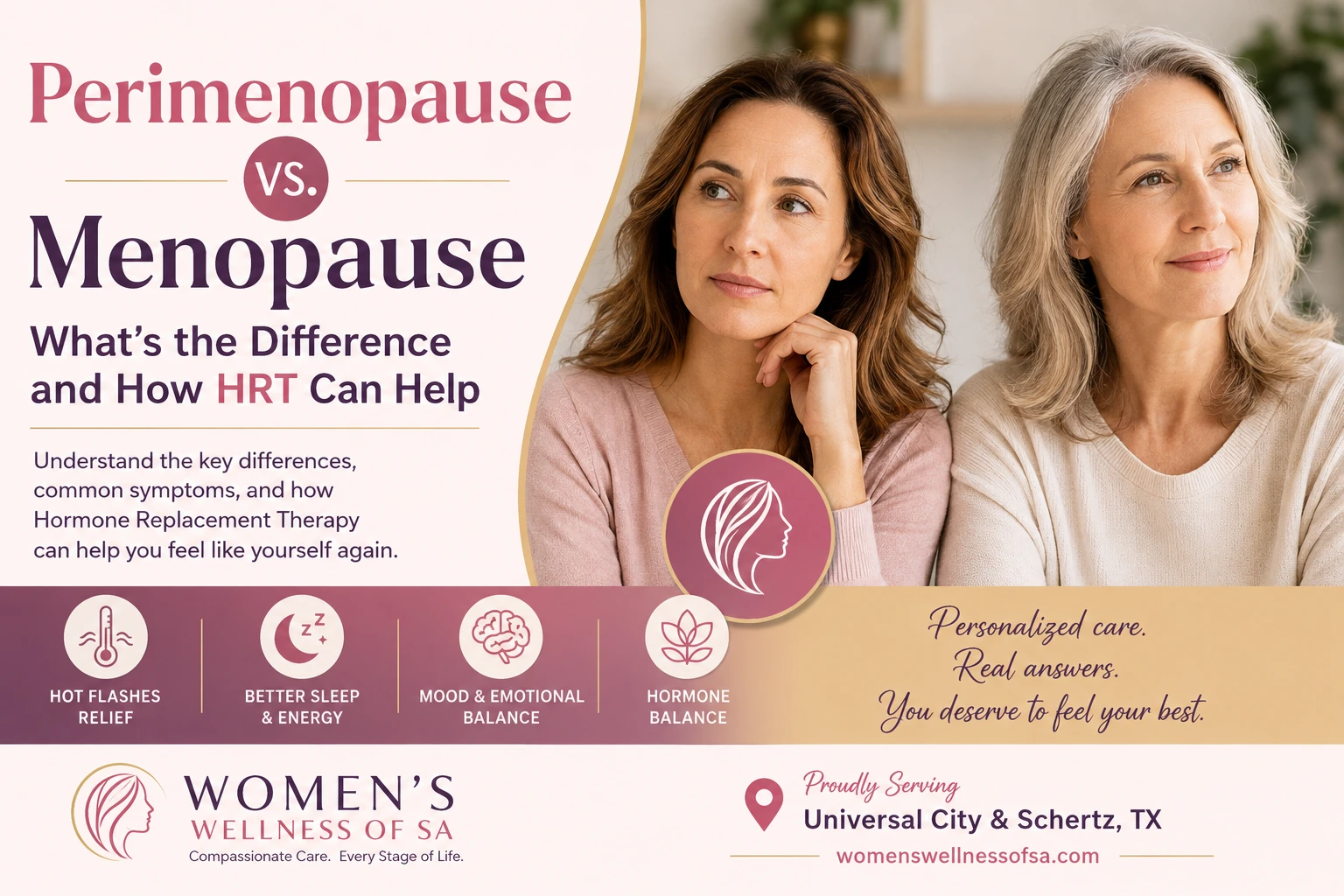
Perimenopause is the transitional stage leading up to menopause, when hormone levels fluctuate unpredictably. Menopause is a single point in time, reached after 12 consecutive months without a period. The two are often used interchangeably, but they describe different stages of the same transition, and knowing which one you’re in changes how you manage symptoms.
What Is Perimenopause?
Perimenopause is the years leading up to menopause, when your ovaries gradually produce less estrogen and hormone levels fluctuate rather than decline steadily. According to the American College of Obstetricians and Gynecologists (ACOG), perimenopause typically begins in a woman’s 30s and 40s, earlier than many women expect.
During this stage, periods usually become irregular rather than stopping outright, and hormone levels can swing unpredictably month to month. That unpredictability is the defining feature of perimenopause, and the main reason symptoms can feel so inconsistent from one month to the next.
What Is Menopause?
Menopause is officially reached after 12 consecutive months without a period. It’s not a stage, it’s a single point in time. Once you hit that milestone, you’re postmenopausal for the rest of your life.
Where perimenopause involves hormone levels rising and falling unevenly, menopause reflects a more consistent, low-estrogen state. ACOG notes the average age of menopause is 51. The hormonal unpredictability of perimenopause has settled by this point, even though symptoms tied to lower estrogen can continue.
Perimenopause vs. Menopause: Key Differences
| | Perimenopause | Menopause |
| Hormone levels | Fluctuating, unpredictable | Consistently low |
| Periods | Irregular, still occurring | Absent for 12+ months |
| Typical duration | Months to several years | A single point in time; postmenopause follows |
| Fertility | Still possible, though reduced | No longer fertile |
| Common symptoms | Hot flashes, mood swings, irregular cycles, sleep changes | Similar symptoms, often more stable in pattern |
The core distinction: perimenopause is a process. Menopause is a milestone you reach once periods have stopped for a full year.
What Are the Symptoms of Perimenopause?
The most common perimenopause symptoms are irregular periods, hot flashes and night sweats, sleep disruption, mood changes, changes in libido, and vaginal dryness. Symptoms vary widely in both which ones appear and how intense they are, which is exactly why so many women feel unsure whether they’re in perimenopause, early menopause, or something else entirely.
When Does Perimenopause Start, and How Long Does It Last?
Perimenopause most often starts in a woman’s 30s or 40s and typically lasts anywhere from a few months to several years before periods stop completely and menopause begins. There’s no single “normal” length, the timeline depends on individual factors including genetics and overall health, which is exactly why a provider looking at your specific hormone pattern gives a clearer answer than a general timeline.
Is Perimenopause Worse Than Menopause?
Neither stage is objectively worse, but perimenopause tends to feel more unpredictable. Because hormone levels swing rather than settling, symptoms in perimenopause can come and go without much warning. Menopause, by contrast, typically brings a more stable hormonal state, which some women find easier to manage even though symptoms like hot flashes or vaginal dryness can persist. How each stage actually feels comes down to individual biology and health, which is why personalized care matters so much during this transition.
How HRT Can Help During Perimenopause and Menopause
Hormone replacement therapy can be effective at either stage. By supplementing the hormones your body is producing less of, or producing unevenly, HRT can ease hot flashes, stabilize mood, improve sleep quality, and support overall hormone balance. According to ACOG, hormone therapy is also called menopausal hormone therapy and is available as estrogen alone or combined with progestin, depending on whether you’ve had a hysterectomy.
Treatment isn’t one-size-fits-all. The right approach depends on where you are in the transition, your specific symptoms, and your health history. At Women’s Wellness of SA, we offer personalized HRT consultations at our Universal City and Schertz locations, so you get a treatment plan built around your actual symptoms and hormone pattern, not a generic protocol.
If you’re noticing some of the early signs mentioned above, our guide on signs of hormonal imbalance can help you figure out what to watch for before your next visit.
When Should You Talk to a Provider About HRT?
Schedule a consultation if your symptoms are interfering with daily life, sleep, or relationships, if you’re unsure whether you’re in perimenopause, menopause, or something else, if you want a personalized hormone plan rather than guesswork, or if lifestyle changes alone haven’t helped. A hormone evaluation gives you clarity on exactly where you are in the transition and what your options actually are.
If you’re noticing symptoms and aren’t sure whether you’re in perimenopause, menopause, or something else, a personalized evaluation gives you real answers. Learn more about our Hormone Replacement Therapy services or book an appointment with our Universal City or Schertz team today.